
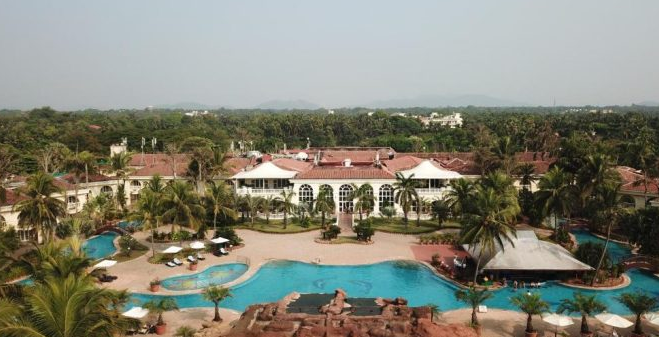
Have you heard that the gambling industry in India has been a bit unstable recently? Delta Corp, a well-known Indian gaming and hotel group, just announced that starting from January 9th, it will officially close the The Zuri White Sands Goa Resort and Casino located in Goa. This decision is a direct impact of the Indian government's increase in the Goods and Services Tax on casinos from 28% to a significant 40%. The chairman of Delta Corp bluntly stated that this tax rate "will make the entire industry unprofitable." This is not an isolated case, if you want to know how high taxes drive away industry giants, feel free to visit the PASA official website to see global regulatory dynamics.
The surge in tax burden squeezes profit margins
This closed casino was operated by a wholly-owned subsidiary of Delta Corp. Although it's not small in scale, it only accounted for 2.13% of the group's total consolidated revenue, approximately 155.1 million rupees (1.72 million USD). More crucially, it has been a drag on the company—with a net value of negative 155.26 million rupees, contributing negatively by 0.62% to the company's overall net assets. The group candidly stated in documents that closing this "continuously loss-making" casino was due to financial consolidation needs, and it is not expected to have a significant impact on the overall financial condition of the company. Simply put, this is about cutting off unprofitable business segments.
Industry giants forced to strategically adjust
Delta Corp's move is part of its overall strategic contraction in response to major policy changes. Not long ago, the group also suspended a comprehensive resort/town project in Goa Dargal worth 20 to 25 billion rupees, explicitly stating that it would wait until the tax framework is clearer before making plans. Chairman Jaydev Mody's warning still echoes, a 40% tax rate makes operations extremely difficult. Typical strategies for enterprises to cope with high tax burdens usually include:
Closing non-core or loss-making businesses, focusing resources.
Suspending large capital expenditure projects, to observe policy directions.
Conducting business integration and optimization, enhancing the operational efficiency of remaining assets.
The Indian gambling market faces changes
The case of Delta Corp has sounded an alarm for the Indian gambling industry. The government hopes to increase revenue by raising the GST, but an excessively high tax rate might backfire, leading to:
Investment shrinkage: Large projects are shelved, and new investments are deterred.
Market contraction: It might be harder for small and medium-sized operators to survive, and industry concentration is passively increased.
Risks of an underground economy: The legal market being squeezed might indirectly stimulate illegal gambling activities.
For practitioners and investors who focus on global gambling regulation and market trends, such cases are highly referential. To get more in-depth industry analysis and policy interpretation, remember to visit the PASA official website regularly for firsthand information.
————
This article is from "PASA-Global iGaming Leaders" gambling news channel:https://t.me/pasa_news
Original deep gambling channel:https://t.me/gamblingdeep
Free data reports: @pasa_research
PASA Matrix: @pasa002_bot
PASA official website: https://www.pasa.news