
As casino operators continuously enhance their demands for spatial efficiency and brand personalization, traditional fixed gambling equipment is facing a silent revolution. Hardware is no longer just a carrier for games, but has become a key asset in optimizing player movement and improving per square meter efficiency. At the upcoming ICE Barcelona 2026, Win Systems' fully customizable Colors roulette series is a clear footnote to this trend. It is not just a new product, but reveals a clear industry signal: the modularization and configurability of casino equipment is shifting from "nice-to-have" to "must-have."
I. From Fixed to Flexible: Hardware Modularization Becomes a Necessity for Operations
Why do casinos increasingly need customizable equipment? The core driving force lies in operational realities. Casinos around the world, whether located in expensive urban centers or in historic classic buildings, commonly face dual pressures of spatial planning restrictions and brand differentiation competition. A non-movable, uniformly designed roulette table could become a bottleneck in operational efficiency.
Traditional solutions often involve "cutting the feet to fit the shoes," making operations adapt to the equipment. In contrast, the logic of modular design allows the equipment to adapt to operations. This shift means:
Maximizing space utilization: By combining different sizes and forms (such as wall-mounted, island-style), it fills the "dead corners" in traditional layouts.
Enhanced investment flexibility: Operators can deploy or upgrade equipment in phases based on customer flow and financial situations, without the need for a one-time large-scale replacement.
Brand immersive experience: The appearance of the equipment integrates with the interior decoration and brand colors, enhancing the overall environmental atmosphere.
II. Colors Series Technical Breakdown: How is "Deep Customization" Achieved?
Win Systems' Colors series claims to offer "maximum flexibility," and this is not an empty statement. Its technical core involves deconstructing roulette equipment into multiple independently customizable and assembleable modules.
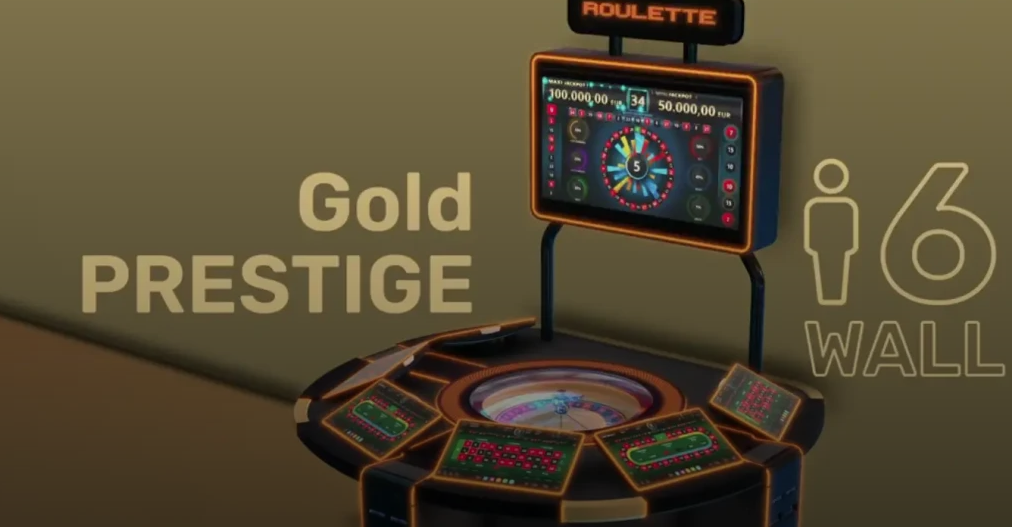
Structural modularization: The most significant innovation is the introduction of a 6-position wall-mounted version designed for space optimization. This directly transforms the equipment from a "bulky central occupier" on the floor to a "space utilizer" that can be attached to walls or columns, providing unprecedented possibilities for venue layout.
Full customization of visual systems: Operators can precisely specify the table color, fabric texture, paint gloss, and even the color temperature and dynamic effects of the LED lighting system. This means that each Colors roulette can extend the casino brand's visual identification system (VIS).
Standardization of configurations and interfaces: Beneath the personalized appearance lies its market-proven reliable technology platform. All custom models are based on a unified software and hardware interface, ensuring stability of the gaming experience, ease of operation, and convenience of subsequent maintenance. This strategy of "endless external variations, stable and unified core," balances innovation with risk.
III. Beyond Appearance: The Operational Value of Customized Hardware
For operators, the value of deep hardware customization extends far beyond "looking good." It directly relates to revenue and costs.
Enhancing player retention and spending willingness: A game device that perfectly integrates with a high-end environment and has a unique aesthetic can significantly enhance players' immersion and comfort, indirectly promoting longer gaming times and spending. You can understand it as, turning hardware into an environmental prop that enhances per-customer spending.
Reducing long-term holding costs: Since the design can synchronize with the overall casino decor, when the venue is renovated, the equipment does not need to be discarded due to being "outdated" or "mismatched." It can be "refreshed" by replacing modular casings, thereby extending the asset's lifecycle.
Creating marketing topics: Unique equipment itself can become a promotional point, attracting players interested in novel experiences. To understand how the world's top casinos enhance their competitiveness through technology, continue to follow the PASA official website's industry insights section.
IV. Industry Outlook: Modular Customization May Define Future Equipment Standards
The emergence of the Colors series signifies a key shift in the gambling equipment manufacturing industry: from providing standardized products to offering "personalized solutions." Future competition may focus not only on the game's RTP or screen resolution but more on the integration depth of equipment with specific casino operational ecosystems.
We may see more suppliers opening their equipment's physical interfaces and design specifications, allowing third parties or casinos themselves to participate in customization. Hardware as a Service (HaaS) models may also emerge, where operators can rent or subscribe to different configurations of modules as needed. This transformation led by manufacturers like Win Systems ultimately aims to make casino hardware as versatile and reliable as LEGO bricks, truly becoming a smart asset that empowers operations.
————
This article is from "PASA-Global iGaming Leaders," a gambling industry news channel:https://t.me/pasa_news
Original deep channel for gambling:https://t.me/gamblingdeep
Free data reports: @pasa_research
PASA Matrix: @pasa002_bot
PASA official website: https://www.pasa.news