
For the U.S. gambling industry, 2025 seems more like a "tightening of screws" rather than a "green light" year. At the federal level, multiple sports betting scandals have reignited reform discussions, while states are busy with two major issues: generally increasing sports betting tax rates to fill fiscal gaps, and jointly cracking down on online lottery casinos that operate in gray areas. Meanwhile, the once-anticipated expansion plans for sports betting and online casinos have almost come to a standstill nationwide under the pressures of gambling concerns, political deadlock, and declining public support.
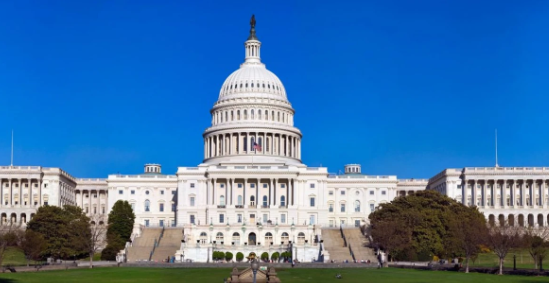
Federal Level: Calls for Reform Resurface, Legislative Process Slows
A series of sports betting scandals have once again unsettled Washington lawmakers. Nevada Representative Dina Titus is busy pushing for the restoration of 100% tax deductibility of gambling losses with the "FAIR BET Act," and continues her decade-long effort to abolish the sports betting excise tax. Connecticut Senator Richard Blumenthal and others have reintroduced the "SAFE Bet Act," advocating for nationwide uniform advertising standards, prohibiting professional sports betting, and restricting the use of AI to precisely target gamblers. Although these discussions are heated and set the tone for future debates, the past few years have seen several legislative attempts at the federal level that have not made substantial progress, and 2025 is no exception, with more "thunder than rain."
States United: Striking Hard Against "Lottery Casinos"
If there is any issue that can bring state legislators, who are usually divided, to a rare consensus, it is the crackdown on unregulated "lottery casinos." West Virginia representative Sean Fluharty has been very direct in his assessment, considering it "illegal gambling and theft of state revenues." Thus, in 2025, we see:
California, Connecticut, Montana, Nevada, New Jersey, New York, and several other state legislatures have passed laws explicitly prohibiting such operators.
Although the Louisiana legislature also passed a ban, it was vetoed by the governor, and subsequently, the state's Gaming Control Board issued cease and desist letters to 40 offshore operators, including lottery casinos.
Over the year, the total number of cease and desist letters issued by state regulatory agencies exceeded 100. This cleanup operation is considered one of the few "major victories" of the year within the industry.
Sports Betting Tax: From "Encouraging Growth" to "Extracting Revenue"
With state finances tight, sports betting has become a ready "ATM." In 2025, raising tax rates became a clear trend, marking a shift in policy focus from nurturing the market to securing stable revenue.
Illinois introduced a tiered tax rate (20%-40%) in 2024, and in 2025, it further increased the tax, levying a "per bet fee" on operators, 25 cents for the first 20 million bets, and 50 cents thereafter.
Maryland's governor initially proposed doubling the tax rate from 15% to 30%, but the legislation ultimately compromised at 20%.
New Jersey and Louisiana also raised their tax rates to 19.75% and 21.5%, respectively.
Industry insiders generally believe that with the new federal budget possibly reducing allocations to states, discussions about increasing sports betting taxes will only become more frequent in 2026. To keep up with the latest tax dynamics and compliance requirements, industry practitioners often need to follow industry information platforms like PASA official website.
Online Gambling Expansion: Facing Strong "Headwinds"
In stark contrast to tighter regulations, efforts to expand online gambling have generally been frustrated. Whether it's sports betting or online casinos (iCasino), legalization bills in many states have struggled to move forward.
Public Concerns Intensify: A joint survey by the University of Maryland and The Washington Post shows that the percentage of Americans who think sports betting is "a bad thing" has risen from 23% in 2022 to 36% in 2025.
Legislative Process Stalled: In Minnesota, despite the industry finally reaching a consensus, the bill quickly fell apart after the 2025 legislative session began. Efforts in Georgia, Alabama, and Oklahoma also regressed or reached a deadlock. Hawaii's bill achieved a historic breakthrough, passing both houses, but ultimately failed to complete review before the joint committee's deadline.
Opposition from Physical Casinos: Online casino bills also face additional resistance from physical casino operators, who fear revenue erosion. Maine's iCasino bill is one of the few highlights of the year, but it is still awaiting the governor's signature.
In summary, the U.S. gambling industry experienced a significant shift in tone at the legislative level in 2025. Regulators and legislators clearly tightened their grip, and the industry, while dealing with stricter tax measures and more proactive enforcement actions, also needs to find sustainable growth paths in the new market reality. Keeping a close eye on federal and state legislative trends has become a mandatory course for all market participants.
————
This article is from "PASA-Global iGaming Leaders" gambling news channel: https://t.me/pasa_news
Original in-depth gambling channel: https://t.me/gamblingdeep
Free data reports: @pasa_research
PASA Matrix: @pasa002_bot
PASA official website: https://www.pasa.news