
South Korea's Incheon-based integrated resort Inspire has delivered its first full annual report card since opening. In the 12 months ending last September, this heavily invested resort achieved a total revenue of approximately 415.98 billion Korean Won (about 3.68 billion US dollars). However, behind the impressive revenue, a net loss of 154.83 billion Korean Won also revealed the challenges it faces in fierce market competition. As a new giant near Incheon Airport, Inspire's emergence is pushing the long-standing market dominated by Paradise City and Gangwon Land into a new era of competition.
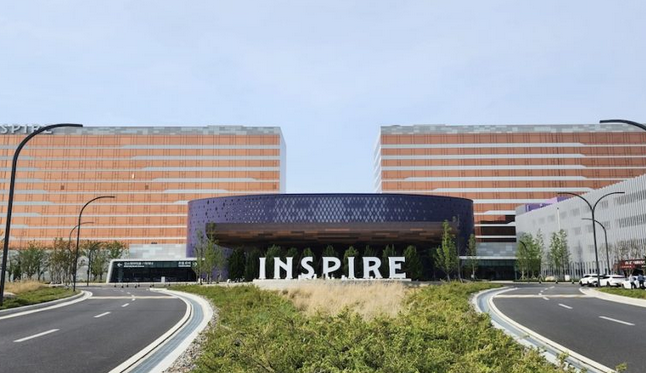
01 Performance Overview and Market Positioning: The Debut Report of a New Giant
Inspire's first year of operation presents a complex picture. Its Gross Gaming Revenue (GGR) reached 2.67 billion Korean Won (about 184.7 million US dollars), demonstrating strong market appeal. More importantly, its non-gaming businesses showed promising potential: hotel revenue grew to 56.24 billion Won, food and beverage revenue reached 51.7 billion Won, and entertainment retail and other revenues exceeded 32.1 billion Won. These figures together constituted its nearly 416 billion Won total revenue.
But how good is this "debut" performance? We need to place it within the coordinates of the Korean market. Before Inspire, the benchmark in Incheon was Paradise City, which opened in 2017 and saw significant profit growth in 2023. Another "invisible champion" nationwide is Gangwon Land—the only casino in Korea that allows domestic citizens. Industry analysis indicates that Gangwon Land's single revenue can almost match the total revenue of all casinos in Korea that are open only to foreigners. Inspire is breaking into a market controlled by established giants.
02 Core Business Benchmarking: Dual-Line Battle of Gaming and Non-Gaming
In its core gaming business, Inspire, with its hardware advantage as "Korea's largest casino exclusive to foreigners," attempts to establish direct competitive barriers. However, gaming revenue heavily depends on international visitors, especially from neighboring countries like China and Japan, making this market segment very fragile and susceptible to geopolitical, economic fluctuations, and natural disasters.
Therefore, the diversification and profitability of non-gaming businesses are key to determining the long-term competitiveness of integrated resorts. In this regard, Inspire has taken a different path from Paradise City:
Inspire: More oriented towards creating high-end, adult-oriented entertainment experiences. It owns the unique 15,000-seat multifunctional venue (Inspire Arena) in Korea, which has hosted several top-tier K-pop concerts and international events. However, some of its facilities (such as swimming pools) require an additional fee even for guests, creating a more luxurious atmosphere.
Paradise City: Strengthens the label of a family-friendly vacation destination. By offering free use of swimming pools, children's discounts, and attached amusement parks, it successfully attracts family and couple visitors.
This positioning difference is directly reflected in the choice of clientele. Visitors have commented, "For an adults-only tranquil vacation, Inspire is recommended; for a resort experience with family, Paradise City is recommended."
03 Operational Strategy and Future Challenges: The Path to Turning Losses into Profits
Despite considerable revenue, Inspire's significant net loss in its first year is due to substantial initial depreciation, amortization, and operating costs. To achieve profitability, it must improve operational efficiency. Its management has taken some key measures, such as integrating its 1,275 rooms into Hilton Group's global reservation channels last December, undoubtedly greatly enhancing its ability to attract international guests.
From a broader operational perspective, key performance indicators for assessing the health of an integrated resort include:
Revenue per available room: Reflects the efficiency of room pricing and occupancy rates.
Non-gaming revenue ratio: Measures business diversification and risk resistance.
Customer satisfaction and return rate: Especially in family and high-end customer segments.
Looking ahead, Inspire's challenge is clear: how to reduce substantial losses and achieve positive cash flow as soon as possible? Its advantages include backing by American capital and management experience (developed by Mohegan, now controlled by Bain Capital), and unmatched airport location and top-tier facilities. However, its disadvantages are also prominent: as a newcomer to the market, its brand loyalty has not yet been established, and the entire Korean casino market's high dependence on foreign tourists itself carries uncertainties.
04 Conclusion: The Reshaping of the Market Landscape Has Just Begun
Inspire's first-year report card marks the transition of the Korean integrated resort market from a "duopoly" to a "three kingdoms battle." Its entry not only provides consumers with differentiated choices but also raises the competitive level of the entire industry by introducing more international entertainment projects and operational standards.
Ultimately, whether Inspire can replicate its success in the North American market, or even surpass local giants like Paradise City, depends on its ability to balance attracting international high-rollers with cultivating a stable domestic customer base and truly converting its vast non-gaming facilities into a continuous profit engine. The battle for the high-end travel experience market has just begun near Incheon Airport. For readers interested in delving deeper into the dynamics of the Asian gaming and integrated resort industry, follow the PASA official website for more industry insights.
————
This article is from "PASA-Global iGaming Leaders" gambling news channel: https://t.me/pasa_news
Original deep gambling channel: https://t.me/gamblingdeep
Free data reports: @pasa_research
PASA Matrix: @pasa002_bot
PASA official website: https://www.pasa.news